TikTok advertising can send people to two very different places: your TikTok Shop, where they check out inside the app, or your own website, where they buy through your store. Both can work, and many brands use both. But they behave differently, require different tracking and suit different goals.
This guide explains how website-focused TikTok ads work, the role of the TikTok pixel and server-side tracking, and how to decide when to use website campaigns, shop campaigns or both.
Two Destinations, Two Journeys
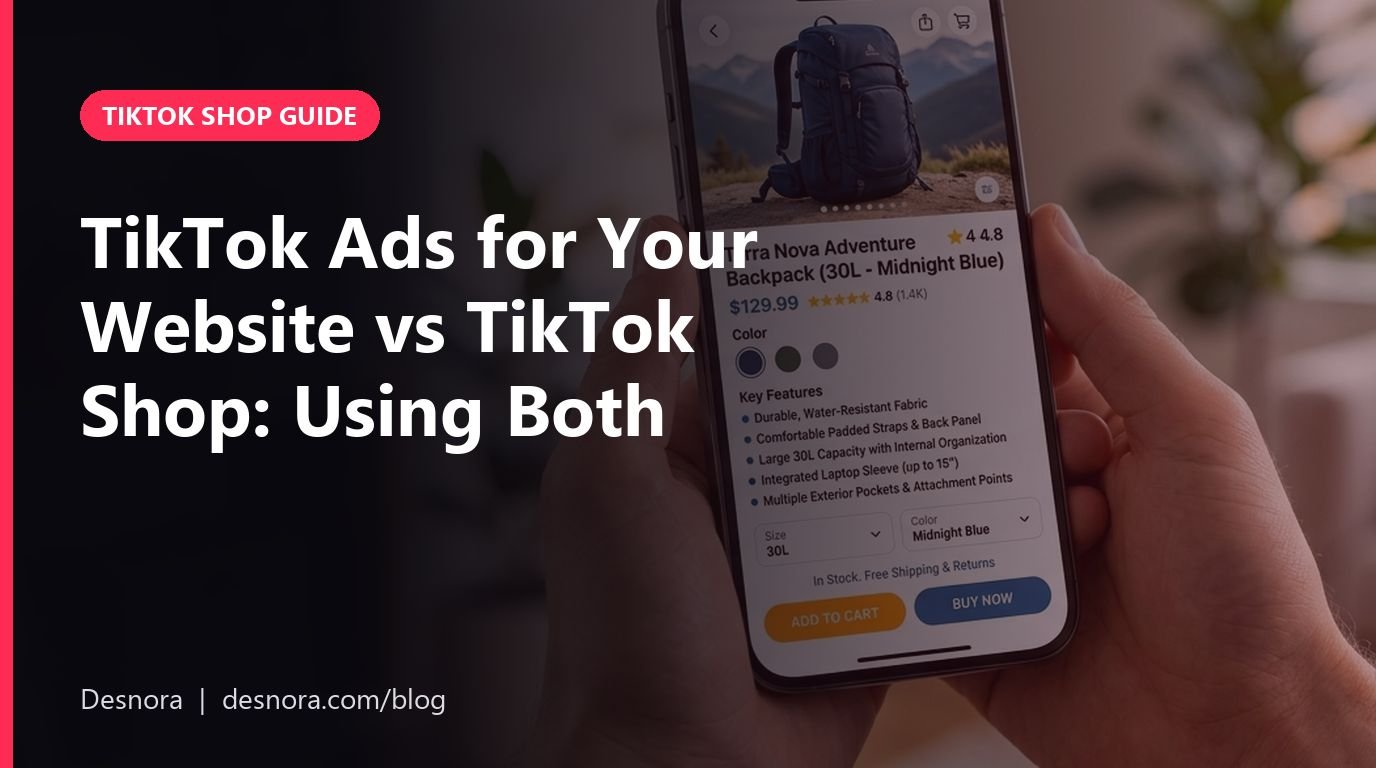
TikTok Shop ads keep the journey inside TikTok. Shoppers tap, view the product and check out in the app. TikTok sees the whole purchase, which helps optimisation. Our TikTok Shop ads guide covers this in depth.
Website ads send shoppers to your own store. They leave TikTok, land on your site and complete checkout there. Tracking relies on the TikTok pixel and server-side events to report conversions back to TikTok.
When Website Ads Make Sense
- You do not sell on TikTok Shop, or TikTok Shop is not available in a market.
- Your products are restricted on TikTok Shop but allowed in ads to your site.
- You want customers on your own platform for loyalty programmes or subscriptions.
- Your website offers a wider range, customisation or experiences not available on TikTok Shop.
- You are building an email list or first-party customer relationships, within privacy rules.
When TikTok Shop Ads Make Sense
- You want the smoothest, highest-converting path for impulse purchases.
- You rely on creators and affiliates who promote shop products.
- You want sales to build TikTok Shop history, reviews and visibility.
- Your website conversion rate on mobile traffic from TikTok is weak.
The TikTok Pixel
The TikTok pixel is a piece of code on your website that records actions such as page views, add-to-cart and purchases, and reports them to TikTok. This lets TikTok optimise campaigns for conversions and attribute sales to ads. Most ecommerce platforms offer easy pixel setup through official apps or integrations. Our Shopify integration guide mentions TikTok's Shopify app, which can set up tracking.
Server-Side Tracking
Browser-based tracking can miss events due to ad blockers, privacy settings and cookie restrictions. TikTok offers a server-side events API that sends conversion data directly from your server. Using both pixel and server-side events, with deduplication, generally improves data accuracy and campaign optimisation. Many ecommerce platforms and integrations can configure this for you.
Privacy and Consent
Tracking must comply with privacy laws and your own privacy policy. In many markets, you need consent before setting certain tracking cookies. Use a compliant consent tool, update your privacy policy and configure the pixel to respect consent choices. Seek advice if you are unsure about requirements in your markets.
Landing Pages for TikTok Traffic
TikTok users arrive on mobile, mid-scroll and with short attention spans. Landing pages must load fast, match the ad's message and make purchasing easy. Use mobile-first design, clear product imagery, short copy, visible pricing, simple checkout and fast payment options. Sending TikTok traffic to a slow or cluttered homepage usually wastes ad spend. Our storefront design and listing image services apply the same conversion principles.
Creative for Website Campaigns
The creative principles are similar to shop ads: native-feeling content, strong hooks and clear demonstrations. One difference is the call to action, which directs viewers to "shop on our website" rather than tapping a shop product. Our guides to hooks and Spark Ads apply to both destinations.
Running Both Without Cannibalising
If you run shop and website campaigns at the same time, they may compete for the same audience and inflate costs. Approaches include separating by product (some products on TikTok Shop, others on the website), by market or by objective, and reviewing blended results across both channels. Measure total revenue against total TikTok spend to see the full picture. Our halo effect guide explains blended measurement.
Pricing Consistency
Keep prices consistent between your website and TikTok Shop where possible. Large differences confuse shoppers and can conflict with platform pricing policies. Use channel-specific promotions deliberately rather than permanent price gaps. Our pricing strategy guide covers this.
Measuring Website Campaigns
Track cost per purchase, return on ad spend, conversion rate, average order value and new customer share. Compare TikTok-reported conversions with your website analytics, expecting some differences due to attribution windows and methods. Post-purchase surveys can add context. Our analytics guide covers measurement principles.
Optimisation Events and Campaign Setup
Website campaigns optimise toward a chosen event, such as purchases or add-to-cart. Optimising for purchases usually produces the most valuable traffic, but it needs enough conversion data to work well. New pixels with little history sometimes start by optimising for earlier events and move to purchases once data builds. Check that each event is firing correctly using TikTok's event testing tools before spending significant budget.
Retargeting Website Visitors
With the pixel in place, you can build audiences of people who visited your website, viewed products or added to cart without buying, and show them follow-up ads where privacy rules and consent allow. Retargeting often delivers strong returns because these viewers already know your brand. Keep retargeting creative fresh and limit frequency so audiences do not feel overwhelmed.
Website Speed and Checkout
TikTok traffic is impatient. Every extra second of load time and every unnecessary checkout step costs sales. Compress images, simplify pages, enable express payment options and test checkout on several phones. Small improvements to site speed and checkout can make website campaigns far more efficient.
Building First-Party Relationships
One advantage of website campaigns is the ability to build direct relationships through email or SMS sign-ups, loyalty programmes and accounts, provided you follow privacy rules and obtain proper consent. These relationships support repeat sales without paying for every interaction. TikTok Shop has its own retention tools, described in our repeat customers guide, and the two approaches complement each other.
Choosing Where Creators Send Traffic
Most TikTok Shop creators promote shop products directly, which keeps the journey simple. If you also want creators to drive website traffic, agree clear terms, tracking links where permitted and appropriate compensation. Avoid confusing audiences by mixing destinations in the same content.
Common Mistakes
- Running website ads without the pixel or server events set up correctly.
- Sending traffic to slow, desktop-focused pages.
- Ignoring consent and privacy requirements.
- Letting shop and website campaigns compete blindly.
- Large price differences between channels.
- Judging channels separately instead of on blended results.
Checklist
- Decide the role of website and shop campaigns.
- Install pixel and server-side events with deduplication.
- Configure consent and update privacy policy.
- Build fast, mobile-first landing pages.
- Align pricing across channels.
- Separate campaigns by product, market or objective.
- Review blended results regularly.
Desnora runs TikTok advertising for both TikTok Shop and brand websites. Explore our TikTok Shop services, our advertising services or request an audit.
Frequently Asked Questions
What is the TikTok pixel?
Code on your website that records actions such as page views, add-to-cart and purchases and reports them to TikTok for optimisation and attribution.
Should I send TikTok ads to my website or TikTok Shop?
It depends on your goals. TikTok Shop offers a smoother in-app checkout, while website ads suit restricted products, loyalty programmes and wider ranges.
What is TikTok server-side tracking?
An events API that sends conversion data from your server to TikTok, improving accuracy when browser tracking is blocked.
Do I need consent for the TikTok pixel?
In many markets, yes. Use a compliant consent tool and configure tracking to respect users' choices.
Can I run TikTok Shop and website ads together?
Yes, but separate them by product, market or objective and measure blended results to avoid cannibalisation.
What makes a good landing page for TikTok traffic?
Fast loading, mobile-first design, a message matching the ad, clear imagery, visible pricing and simple checkout.
Why do TikTok and website analytics show different numbers?
Attribution windows, tracking methods and blocked events differ, so expect some variation and focus on trends.
Should prices match between my website and TikTok Shop?
Keep them consistent where possible, using deliberate channel-specific promotions rather than permanent price gaps.
Can I use creator videos in website ads?
Yes, with the creator's authorization or appropriate usage rights agreed in your contract.
How do I measure TikTok's total impact?
Compare total revenue across TikTok Shop, your website and other channels against total TikTok spend, alongside channel-level data.
Can I retarget website visitors with TikTok ads?
Yes, where privacy rules and consent allow. Build audiences of visitors and cart abandoners and show them fresh follow-up creative.
What should I optimise website campaigns for?
Purchases usually deliver the most valuable traffic once you have enough conversion data. New pixels may start with earlier events.
How can I improve conversion from TikTok traffic on my website?
Speed up pages, simplify checkout, enable express payments and test the full journey on several phones.
Can creators send traffic to my website?
They can, with clear terms and tracking where permitted, but avoid mixing destinations in the same content.
Why test pixel events before spending?
Broken or duplicated events mislead optimisation and reporting, so verify each event fires correctly first.