Q4 gets most of the attention, but TikTok Shop has selling moments all year. New Year resolutions, Valentine's Day, Mother's Day and Father's Day, summer travel, back-to-school and Halloween all create spikes in specific categories. Brands that plan for these moments smooth out their revenue and avoid depending on a single peak season.
This guide walks through a month-by-month calendar of common selling moments, with content ideas and planning lead times. Dates and platform campaigns vary by market and year, so adapt the calendar to the countries you sell in and check Seller Center for official campaigns.
How to Use This Calendar
For each moment, plan backwards: content and creator seeding usually need to start several weeks before the peak, and inventory needs to arrive earlier still. Use your content calendar to schedule work, and our inventory forecasting guide to plan stock.
January: New Year, New Habits
January is driven by resolutions: fitness, healthy eating, organisation, productivity, self-care and saving money. Categories such as fitness equipment, kitchen gadgets, planners and storage often spike. Content ideas include "reset" routines, decluttering transformations and beginner workouts. Seed creators in December so content is live from the first days of January. Our fitness guide covers this peak.
February: Valentine's Day
Valentine's Day lifts jewelry, beauty, fragrance, chocolate and gifts, plus self-care and "Galentine's" products. Content ideas include gift guides by budget, couples' reactions and date-night setups. Start gift content two to three weeks before the date, and stop promoting standard shipping when delivery in time becomes unlikely. Our jewelry guide covers gifting angles.
March and April: Spring Refresh
Spring brings cleaning, home refresh, gardening, outdoor gear and wardrobe updates. Easter and spring holidays in some markets add gifting and family activities. Content ideas include spring cleaning challenges, balcony makeovers and spring outfit hauls. Our home and kitchen guide explains cleaning content.
May: Mother's Day
Mother's Day is one of the biggest gifting moments in many markets, though dates vary by country. Beauty, jewelry, home, wellness and personalised gifts perform well. Content ideas include "gifts she'll actually use", reactions and gift sets. Check the correct date for each market you sell in.
June: Father's Day and Summer Start
Father's Day lifts gadgets, grooming, outdoor, sports and car accessories. Summer begins with travel, festivals, outdoor living and swimwear. Content ideas include gift guides for dads, festival packing lists and summer essentials. Our guides to outdoor gear and car accessories cover these categories.
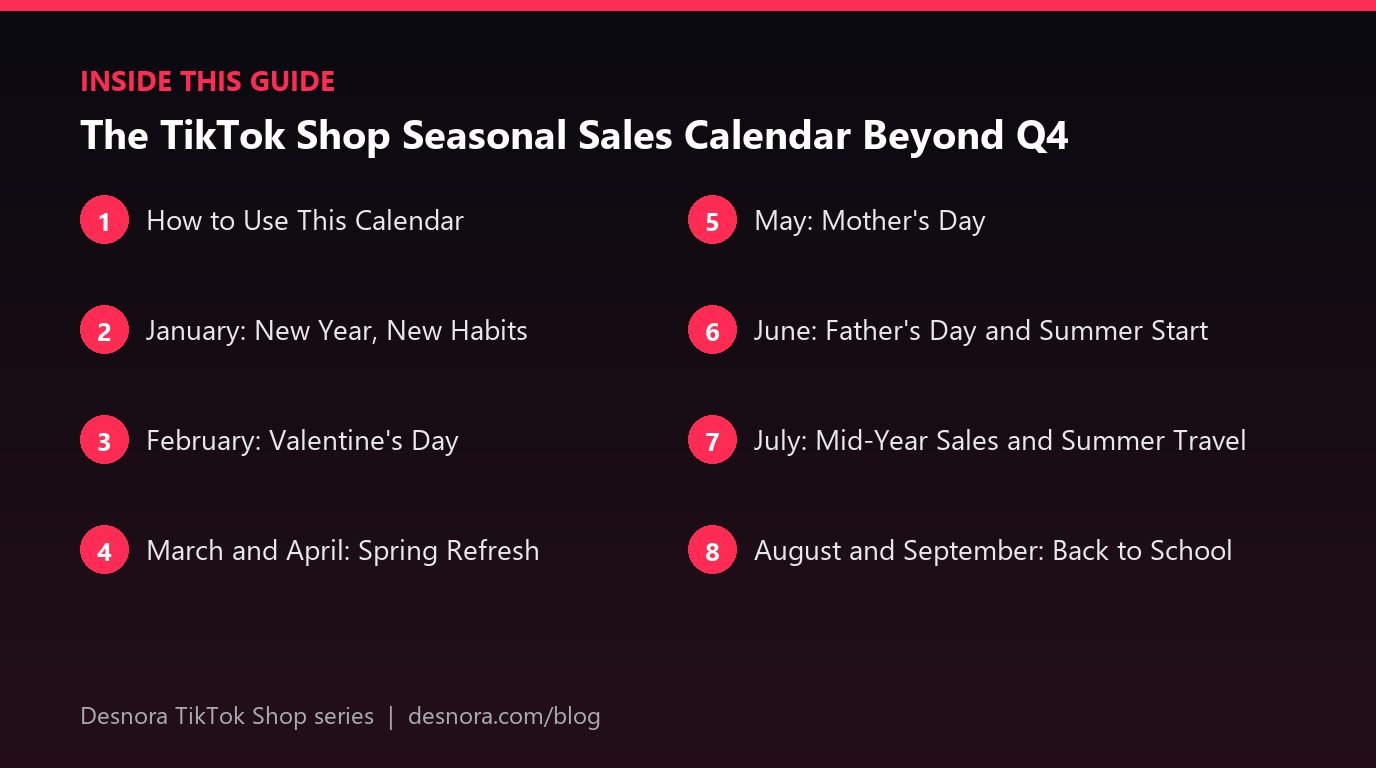
July: Mid-Year Sales and Summer Travel
Mid-year platform campaigns in some markets create major sales events. Summer travel continues, with demand for luggage organisers, travel gadgets and sun care. Plan campaign participation and inventory early. Our promotions guide explains campaign planning.
August and September: Back to School
Back-to-school is a major moment for stationery, bags, tech, dorm essentials, kids' clothing, lunch boxes and organisation. University move-in drives dorm and small-space products. Content ideas include "what's in my backpack", dorm room makeovers and lunch-packing routines. Start content in early August in many markets. Our kids products guide covers family purchases.
October: Halloween and Autumn
Halloween drives costumes, decorations, themed treats, makeup and pet costumes, with highly shareable content. Autumn also brings cosy home products, warm clothing and comfort cooking. Many brands also begin Q4 preparation and early gift content in October. Our Q4 holiday playbook picks up from here.
Other Moments to Consider
- Lunar New Year: important in several markets for gifting and celebration.
- Ramadan and Eid: significant for gifting, fashion and food in many communities.
- Pride month: an opportunity for genuine, respectful engagement where relevant.
- Graduation season: gifts and celebration products.
- Wedding season: guest outfits, gifts and accessories.
- Payday and mid-month sales: recurring platform promotions in some markets.
Choose moments that genuinely fit your products and audience, and treat cultural and religious occasions respectfully.
Planning Lead Times
- Eight to twelve weeks before: inventory orders and campaign registration.
- Four to six weeks before: creator recruitment and seeding.
- Two to three weeks before: content goes live and ads begin.
- Peak week: LIVE events, offers and maximum ad support.
- After the peak: review results and plan the next moment.
November: Singles Day and Pre-Holiday Sales
In several markets, November features major online sale events before the main holiday period, often tied to platform campaigns. These events can generate large spikes for brands prepared with stock and offers. Even where they are less prominent, early November is when many shoppers begin researching gifts. Our Q4 playbook covers Black Friday, Cyber Monday and December in detail.
Category-Specific Seasons
Beyond the general calendar, each category has its own rhythm. Beauty sees summer skincare and winter care shifts. Fashion follows spring/summer and autumn/winter collections. Home peaks around moving seasons and spring cleaning. Pet products rise with adoption seasons and summer travel. Outdoor gear follows weather and festival dates. Map your category's specific seasons alongside the general calendar so you do not miss niche peaks that competitors overlook.
Weather-Driven Demand
Weather can create sudden, short-notice demand: a heatwave for fans and cooling products, a cold snap for heaters and warm clothing, rainy spells for waterproof gear. Keep some flexibility in stock and content to react quickly. Prepare creative in advance for likely weather events, so you can launch ads as soon as conditions change.
Evergreen Products Between Peaks
Seasonal peaks are valuable, but quiet periods matter too. Use them to build evergreen content, recruit creators, improve listings and test new products. Strong evergreen performance between peaks gives you a stable base and makes seasonal spikes a bonus rather than a lifeline.
Reviewing Each Season
After each seasonal moment, review what worked: which products sold, which creators and hooks performed, whether stock and timing were right and how margins held up. Record lessons in a shared document so next year's plan starts from experience rather than guesswork.
Seasonal Bundles and Limited Editions
Seasonal bundles and limited editions give shoppers a reason to buy now. A Valentine's gift set, a summer travel kit or a back-to-school bundle packages existing products in a timely way without new manufacturing. Limited seasonal colours or flavours create urgency and fresh content. Keep quantities modest so leftover stock does not become a problem after the moment passes.
Coordinating Creators Around Seasons
Creators plan seasonal content too, and the best ones fill their calendars early. Contact them four to six weeks before each moment with samples, briefs and offer details. Share delivery cut-off dates so their content does not promise arrival times you cannot meet. Our samples strategy explains timing.
Avoiding Seasonal Pitfalls
- Late inventory that misses the peak.
- Promoting gifts after delivery cut-offs.
- Ignoring date differences between markets.
- Overstocking seasonal items that will not sell afterward.
- Forcing products into moments that do not fit.
Seasonal Calendar Checklist
- Mark relevant moments for each market.
- Plan backwards from each peak.
- Seed creators four to six weeks ahead.
- Prepare seasonal bundles and listings.
- Register for platform campaigns.
- Communicate delivery cut-offs.
- Review results after each moment.
Desnora plans year-round TikTok Shop calendars for brands. Explore our TikTok Shop services or get in touch.
Frequently Asked Questions
What are the biggest TikTok Shop sales moments outside Q4?
New Year resolutions, Valentine's Day, Mother's Day, Father's Day, summer travel, mid-year campaigns, back-to-school and Halloween.
How early should I prepare for a seasonal moment?
Order inventory eight to twelve weeks ahead, seed creators four to six weeks ahead and launch content two to three weeks before the peak.
Do sales dates differ by country?
Yes. Dates such as Mother's Day and platform campaigns vary by market, so adapt your calendar for each country.
What sells in January on TikTok Shop?
Fitness, healthy eating, organisation, productivity and self-care products often peak with New Year resolutions.
Is back-to-school a big moment on TikTok Shop?
Yes, especially for stationery, bags, tech, dorm essentials, kids' clothing and organisation products.
Should I join every seasonal moment?
No. Focus on moments that genuinely fit your products and audience.
How do I avoid overstocking seasonal products?
Forecast carefully, order modest quantities of season-specific items and focus on products that sell beyond the moment.
When should I stop promoting gift products?
Once standard delivery can no longer arrive before the occasion, shift messaging or stop promoting gifts.
How should brands approach cultural and religious occasions?
Respectfully and only where relevant, ideally with input from creators and team members from those communities.
How does this calendar connect to Q4 planning?
October marks the transition, when Halloween overlaps with early gift content and Q4 inventory and creator preparation.
How should I handle weather-driven demand?
Keep some flexible stock and pre-made creative for likely weather events so you can launch content and ads quickly when conditions change.
What should I do between seasonal peaks?
Build evergreen content, recruit creators, improve listings and test new products so you have a stable base between spikes.
Are seasonal bundles worth creating?
Yes. They package existing products in a timely way, give shoppers a reason to buy now and need no new manufacturing.
Should I promote products during weather events?
Yes, where relevant. Prepare creative in advance so you can react quickly to heatwaves, cold snaps or rainy spells.