Pricing on TikTok Shop is not only a commercial decision; it is also a technical one. The platform has rules about how prices are displayed, how discounts are calculated, how often prices can change, which prices can be shown as "original" and what happens to prices during campaigns. Sellers who ignore these rules see promotions rejected, discount labels missing or, in the worst cases, listings flagged for misleading pricing.
This guide explains the technical side of pricing. For how to set profitable prices, read our pricing strategy guide. Rules vary by market and change regularly, and consumer law also applies, so check your market's pricing policies in Seller Center.
List Price and Selling Price
Each SKU has a price you set when creating the listing, sometimes called the list price, original price or retail price. When you run a promotion, a discounted selling price is shown, often with the original price struck through. The struck-through price must be genuine: a price at which you actually offered the product for a reasonable period.
Reference Prices and Genuine Discounts
Many markets use a reference price, such as the lowest price in a recent period, to judge whether a discount is genuine. If you raise the list price shortly before a sale, the system may calculate the discount from the lower recent price, show a smaller discount or reject the promotion. Consumer protection laws in many countries also forbid fake "was" prices. Keep list prices stable and base discounts on real prices.
Price Change Limits
Some markets limit how often or how much prices can change in a period, or send large price changes for review. Frequent changes can also confuse shoppers and creators. Plan price changes, batch them and avoid changing prices right before campaigns or during registration windows.
Campaign Price Locks
When you register products for platform campaigns, prices may be locked from registration until the campaign ends. You may not be able to raise the price or change the campaign discount during that period. Before registering, confirm that the campaign price is profitable after fees, commissions and stacked vouchers. Our promotions setup guide explains registration.
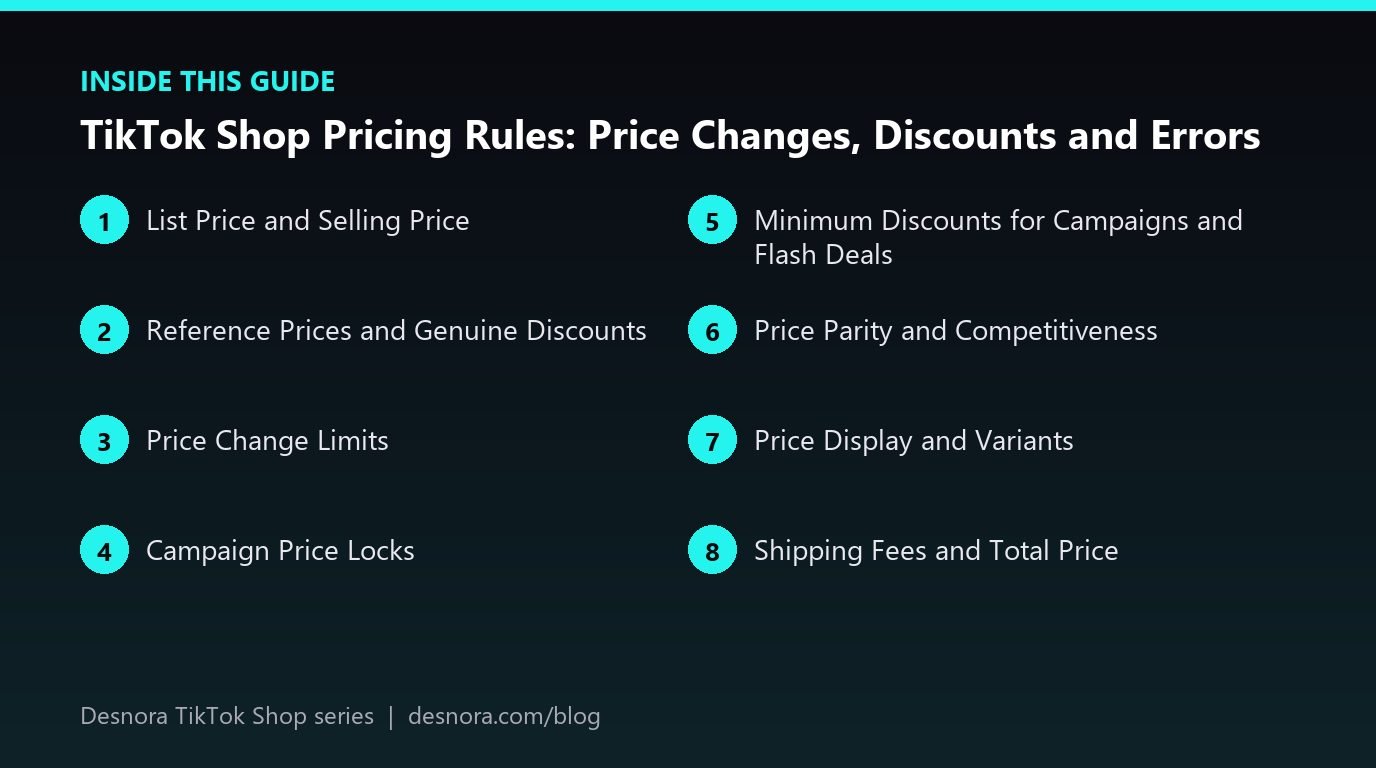
Minimum Discounts for Campaigns and Flash Deals
Platform campaigns and flash deals often require a minimum discount compared with your reference price. If your discount is too small, the product will not qualify. Model whether the required discount still leaves enough margin before registering.
Price Parity and Competitiveness
Some markets encourage or check that prices on TikTok Shop are competitive with other channels. A product priced much higher on TikTok Shop than elsewhere may receive less visibility or be excluded from certain campaigns. Know your prices across channels and avoid large unexplained differences. At the same time, avoid pricing so low that you break agreements with retailers or damage your brand.
Price Display and Variants
If variants have different prices, the product page may show a price range or the lowest price. Make sure the lowest-priced variant is genuinely available, not a decoy. Pricing a tiny variant very low to show an attractive "from" price can be considered misleading in some markets.
Shipping Fees and Total Price
Shoppers see shipping fees at checkout. Very low product prices combined with high shipping fees can look misleading and may break rules in some markets. Keep shipping fees reasonable and consistent with actual costs. Our shipping templates guide explains fee settings.
Currencies and Taxes
Prices are set in the market's currency. Depending on the market, prices may need to include taxes such as VAT or GST, or taxes may be added at checkout. Check whether your prices are tax-inclusive and how invoices are handled. Our guide to taxes and bookkeeping covers accounting.
Pricing Errors and How to Prevent Them
Typos such as a missing zero can sell products at a fraction of their value, and viral traffic can turn a small mistake into hundreds of orders within minutes. Protect yourself:
- Have a second person check large price changes and campaign prices.
- Use bulk edit carefully, keeping a backup of previous prices.
- Check prices in the app after every change.
- Set alerts for unusual sales spikes.
If a pricing error happens, correct it immediately and contact seller support about affected orders. Cancelling orders yourself may count against your metrics, so follow the platform's guidance.
Prices in Creator Content
Creators often mention prices in videos. If you change prices, older videos may show outdated prices, which can confuse shoppers. Tell creators about planned price changes, ask them to avoid stating exact prices in evergreen content and keep campaign prices consistent with what creators promised during the campaign.
Integrations and Price Sync
If prices sync from Shopify or another system, the source system controls prices. Changing prices directly in Seller Center may be overwritten by the next sync. Decide where prices are managed and change them only there. Check how the integration handles promotions so sale prices and campaign prices are not overwritten. See our Shopify integration guide.
A Worked Example: A Rejected Campaign Registration
A home brand tries to register a lamp for a seasonal campaign with a 20 percent discount, but registration fails. Investigating, the team finds they raised the list price two weeks earlier, so the system's reference price is the old, lower price, and the effective discount is under the campaign's minimum. They restore the original list price, calculate a discount from the genuine reference price that meets the minimum and still leaves margin after commission, and register successfully. They also add a rule to their process: no list price increases within the weeks before major campaigns.
Psychological Pricing Within the Rules
Common pricing techniques, such as prices ending in 9 or 99, tiered pack pricing and bundle savings, work well on TikTok Shop as long as they are honest. Show savings that are real, make tier pricing clear on the listing and avoid countdown claims or "lowest price ever" statements you cannot back up. Honest urgency, such as a genuinely limited flash deal quantity, is both effective and compliant.
Documenting Price History
Keep a simple log of every price change: date, SKU, old price, new price and reason. If a promotion is rejected or a shopper or regulator questions a discount, the log shows your genuine price history. It also helps your team analyse how price changes affected sales and conversion over time.
Common Pricing Mistakes
- Raising list prices before sales to inflate discounts.
- Registering campaign prices without margin checks.
- Decimal or typo errors during bulk edits.
- Decoy low-priced variants.
- Large differences from other channels.
- Changing prices in Seller Center when another system controls them.
Coordinating Prices With Affiliates and Ads
Price changes affect more than the listing. Affiliate commissions are usually a percentage of the sale price, so lower prices mean lower earnings for creators, which can reduce their motivation. Ads optimised for certain prices may perform differently after changes. Tell your creator and ads teams before significant price changes, and review commission rates and ad targets at the same time so the whole system stays aligned.
Pricing Rules Checklist
- Keep list prices stable and genuine.
- Understand reference price rules in your market.
- Model margin before campaign registration.
- Check minimum discount requirements.
- Use a second check for big price changes.
- Manage prices in one system.
- Tell creators about planned changes.
Desnora manages pricing and promotions for TikTok Shop brands. Explore our TikTok Shop services or contact us.
Frequently Asked Questions
Can I change my TikTok Shop prices anytime?
Usually, but some markets limit price changes, review large changes or lock prices during campaigns.
What is a reference price?
A price, often the lowest in a recent period, used to judge whether a discount is genuine.
Why is my discount smaller than I set?
The system may calculate it from a lower recent reference price rather than your current list price.
Why was my campaign registration rejected?
The discount may be below the minimum, the price may have changed recently or stock may be insufficient.
Can I raise prices during a campaign?
Campaign prices are often locked until the campaign ends.
Do prices need to match other channels?
Some markets check competitiveness. Avoid large unexplained differences between channels.
What happens if I make a pricing error?
Correct it immediately and contact seller support about affected orders rather than mass-cancelling.
Are prices tax-inclusive?
It depends on the market. Check whether taxes are included or added at checkout.
Can I show a very low price for one variant?
Only if it is a genuine, available option. Decoy prices can be considered misleading.
Why did my price change back?
An integration may be syncing prices from another system. Change prices in the source system.
Should creators mention prices?
For evergreen content, avoid exact prices that may change. Keep campaign prices consistent with what creators promised.
How do I avoid price typos?
Use a second check, keep backups before bulk edits and verify prices in the app after changes.
Should I keep a price history log?
Yes. It proves genuine reference prices if a discount is questioned and helps analyse how price changes affected sales.
Are prices ending in 99 allowed?
Yes. Psychological pricing is fine as long as savings and claims are genuine.