Every cancelled order is a lost sale, a disappointed customer and, in many cases, a hit to your shop's performance metrics. On TikTok Shop, seller-initiated cancellations are typically tracked closely because they signal unreliable service. Buyer cancellations, while different, can still reveal problems with delivery times, expectations or listing accuracy.
This guide explains why cancellations happen, how they affect your shop and practical steps to reduce them. Exact metrics and thresholds vary by market, so check Seller Center for current standards.
Seller vs Buyer Cancellations
Seller cancellations happen when the seller cancels an order, most often because the item is out of stock, the address cannot be served or the order cannot be fulfilled. These usually count against your performance metrics.
Buyer cancellations happen when the customer cancels, often before shipping, because they changed their mind, found a better price, ordered by mistake or became frustrated by slow dispatch. These may not count against you in the same way, but patterns are worth investigating.
Why Cancellations Matter
Seller cancellations can lower your shop performance score, which may affect visibility and access to programmes. They also frustrate customers who expected their purchase, leading to negative feedback. Our account health guide explains how metrics affect your shop.
Cause 1: Stock Not Synced
The most common cause of seller cancellations is selling stock you do not have. This happens when inventory is shared across channels and sync is slow, or when manual stock updates are missed. Fix it with near real-time inventory sync, safety buffers and an order management system for multi-channel sellers. Our OMS guide and inventory guide explain how.
Cause 2: Viral Spikes
A sudden viral video can bring more orders than you have stock. Monitor creator content daily, set low-stock alerts, pause ads on products running low and plan rapid replenishment. Where platform rules allow, adjust available quantities rather than accepting orders you cannot fulfil.
Cause 3: Slow Dispatch
Buyers sometimes cancel orders that have not shipped quickly. Faster dispatch reduces this risk. Set handling times you can meet, process orders daily and upload tracking promptly. Our shipping performance guide covers dispatch standards.
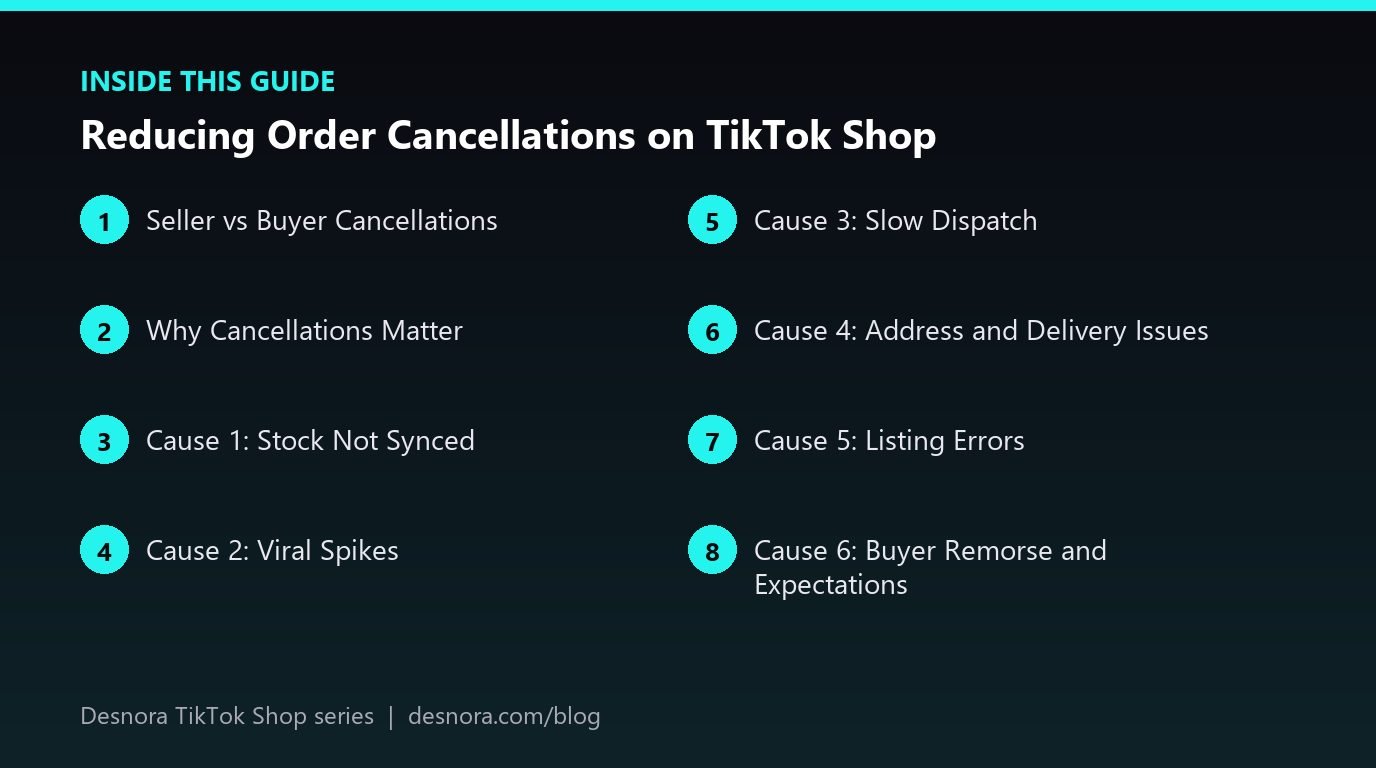
Cause 4: Address and Delivery Issues
Incomplete addresses, undeliverable locations or carrier restrictions can force cancellations. Where possible, contact the buyer through TikTok's messaging to confirm details before cancelling, and make sure your shipping settings reflect where you can actually deliver.
Cause 5: Listing Errors
Wrong prices, incorrect variants or misleading descriptions can lead to cancellations by buyers who notice mistakes or by sellers who cannot honour an order. Review listings carefully, especially after bulk edits, price changes or integration updates.
Cause 6: Buyer Remorse and Expectations
Impulse purchases sometimes lead to quick buyer cancellations. Clear listings, accurate content and realistic delivery estimates reduce surprises. Fast dispatch also helps, since shipped orders are less likely to be cancelled on impulse.
Handling a Necessary Cancellation
If you must cancel, do it quickly, use the correct reason and message the customer politely with an explanation and, if possible, an alternative product or restock date. Then fix the underlying cause so it does not happen again.
Monitoring Cancellations
Track cancellation rates weekly by product, reason and channel. Investigate any increase immediately. Patterns, such as cancellations clustered around a particular product or integration, point to fixable root causes. Our operating checklist includes these reviews.
Pre-Orders and Backorders
Where available, pre-order options can let you sell products before stock arrives, with clear delivery timelines, rather than overselling and cancelling. Use them carefully: delivery dates must be realistic and clearly communicated. Check whether pre-orders are supported for your account and market.
Bundle and Variant Errors
Bundles and variants can cause cancellations if component stock is not tracked correctly. When one component runs out, the bundle should become unavailable automatically. Test bundle stock logic and review it whenever you create new bundles. Our OMS guide explains bundle mapping.
Fulfillment Partner Issues
If your 3PL or fulfillment partner reports stock inaccurately or cannot fulfil an order, cancellations can follow. Agree clear service levels, review stock accuracy regularly and have escalation contacts. Our fulfillment options guide covers partner management.
Integration Failures
When integrations between TikTok Shop, your store and your warehouse fail, orders can be missed or stock can drift. Set alerts for sync errors, check logs daily and test after updates. Quick detection prevents a small sync issue becoming a wave of cancellations.
Communicating With Customers
Proactive communication reduces buyer cancellations. If an order will take longer than expected, message the customer early with a realistic update. Many customers will wait if they know what is happening; silence often leads them to cancel.
Turning Cancellations Into Learning
Every cancellation has a cause. Record the reason, look for patterns and fix the root cause, whether that means improving sync, increasing safety stock or updating a listing. Over time, a disciplined approach can reduce cancellations to rare exceptions.
Cancellations During Campaigns
Sale events increase order volume and the risk of overselling. Before campaigns, raise safety buffers on promoted products, confirm stock counts and check integrations. During campaigns, monitor stock several times a day and pause promotion on items running low. Our Black Friday guide covers peak preparation.
Training Your Team
Make sure everyone who can edit listings, stock or prices understands how their changes affect orders. A single mistaken stock update or price edit can cause a wave of cancellations. Limit editing permissions, document processes and double-check bulk changes.
Customer Experience After a Cancellation
A cancelled order disappoints customers, but a thoughtful response can retain them. Apologise sincerely, explain what happened and, where possible, offer an alternative or let them know when the product will be available again. Customers who feel respected may still buy from you in the future.
Setting Realistic Stock Levels
Showing slightly less stock on TikTok Shop than you physically hold protects against small sync delays and counting errors. The right buffer depends on sales velocity and how often stock is shared across channels. Fast-selling products need larger buffers, especially during campaigns.
Using Cancellation Data to Improve Forecasts
Cancellations caused by stockouts reveal unmet demand. Record how many orders were lost and when, and use this data to improve future forecasts and reorder points. Products that repeatedly sell out deserve larger safety stock and faster replenishment.
Common Mistakes
- Manual stock updates across multiple channels.
- No safety buffer for popular products.
- Ignoring viral spikes until stock runs out.
- Slow dispatch encouraging buyer cancellations.
- Not investigating cancellation patterns.
Desnora helps brands build reliable TikTok Shop operations that keep cancellations low. Explore our TikTok Shop services or contact us.
Frequently Asked Questions
Why are my TikTok Shop orders being cancelled?
Common causes are stock not synced, viral spikes, slow dispatch, address issues, listing errors and buyer remorse.
Do cancellations affect my TikTok Shop account?
Seller cancellations usually count against performance metrics, which can affect visibility and programme access.
What is the difference between seller and buyer cancellations?
Seller cancellations are initiated by you, often due to stock issues. Buyer cancellations are initiated by customers.
How do I prevent overselling?
Use near real-time inventory sync, safety buffers and an order management system if you sell on several channels.
Can fast shipping reduce cancellations?
Yes. Orders that ship quickly are less likely to be cancelled by buyers.
What should I do if I must cancel an order?
Cancel quickly with the correct reason, message the customer politely and fix the underlying cause.
How do viral videos cause cancellations?
They can bring more orders than you have stock. Monitor content, set alerts and replenish quickly.
Can listing mistakes cause cancellations?
Yes. Wrong prices or variants can lead to cancellations, so review listings after edits and updates.
How often should I review cancellations?
Weekly, by product, reason and channel, investigating any increase immediately.
Should I contact buyers before cancelling for address issues?
Where possible, yes. Confirm details through TikTok's messaging before cancelling.
Can pre-orders reduce cancellations?
Where supported, pre-orders with realistic delivery dates let you sell before stock arrives instead of overselling.
How do integration failures cause cancellations?
Failed syncs can miss orders or let stock drift, so set alerts and check logs daily.
How do I prevent cancellations during sale events?
Raise safety buffers, confirm stock counts, check integrations and monitor stock several times a day during campaigns.
Who should be able to edit stock and prices?
Limit editing permissions to trained team members and double-check bulk changes before saving.
How big should my stock buffer be?
It depends on sales velocity and channel sharing. Fast sellers and campaign products need larger buffers.
What should I tell a customer after cancelling?
Apologise, explain briefly and offer an alternative or a restock date where possible.
Can cancellation data improve forecasting?
Yes. Stockout cancellations reveal unmet demand, helping you set better safety stock and reorder points.
Do buyer cancellations matter?
They may not count against you like seller cancellations, but patterns can reveal delivery or expectation problems.
Should I use pre-orders to avoid cancellations?
Where supported, pre-orders with realistic dates are better than overselling, but delivery promises must be met.